
Overview
In payments and banking, "Disputes" and "Chargebacks" are two common terms that, while related, have different specific meanings and processing procedures. See details:
Disputes are generally resolved through a default workflow, with another process called Rapid Dispute Resolution workflow. This process is independent and cannot be combined with the default chargeback workflow.
Default Workflow
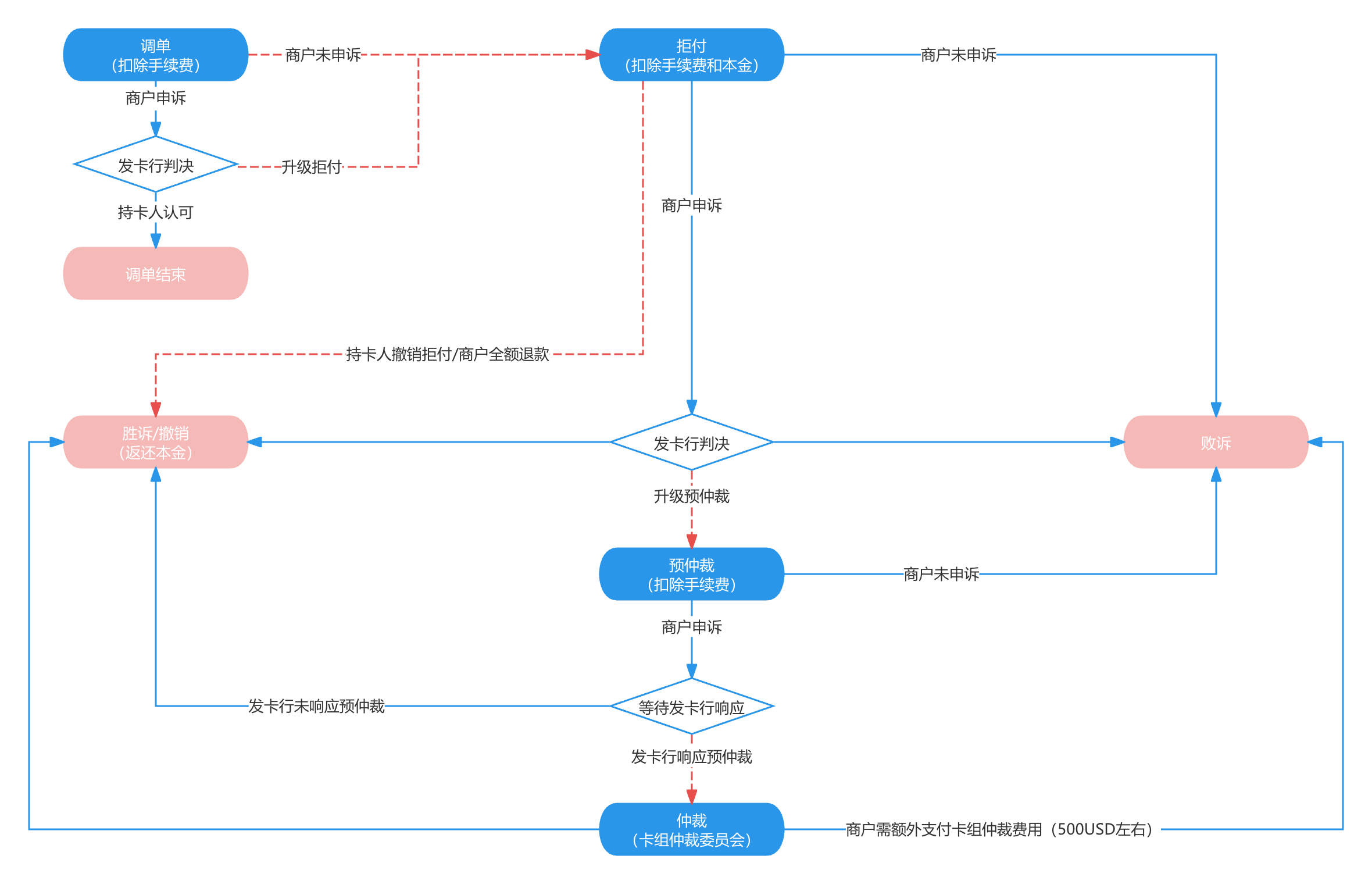
Retrieval Request
A Request For Information (RFI) is a process where the cardholder requests additional information from their bank when they do not recognize a transaction. For RFI, you should upload information that can help the cardholder identify the transaction, or evidence supporting your position to prove the transaction was valid.
Chargeback Notification
When Disputes escalate to Chargebacks, you will receive a chargeback notification. You can view relevant chargeback information in your merchant backend. If you have enabled the API, your server will receive an asynchronous chargeback notification. At the same time, the equivalent principal amount of the transaction will be deducted from your account. After understanding all the information, you can choose:
- Abandon appeal - The transaction amount will be forcibly refunded to the cardholder's account
- File an appeal - You need to provide relevant supporting materials within the specified time to defend against this chargeback. You can submit an appeal through the merchant backend or via API. Enter the pre-arbitration process.
Pre-Arbitration
If you are not satisfied with the pre-arbitration result, you can pay an arbitration fee (approximately 500 USD, charged on top of the chargeback amount) and file another appeal. The dispute will enter the formal arbitration stage.
Arbitration
Formal arbitration is adjudicated by credit card organizations (such as Visa or Mastercard), and the ruling is final and binding.
RDR
The Rapid Dispute Resolution (RDR) process is a simplified and accelerated mechanism for handling transaction disputes launched by credit card companies. The purpose of RDR is to quickly resolve disputes at the initial stage of dispute occurrence through automation and preset rules, thereby reducing the burden on merchants and cardholders. If a dispute meets RDR processing standards, the system will automatically issue a refund based on preset rules.